
La Galerie
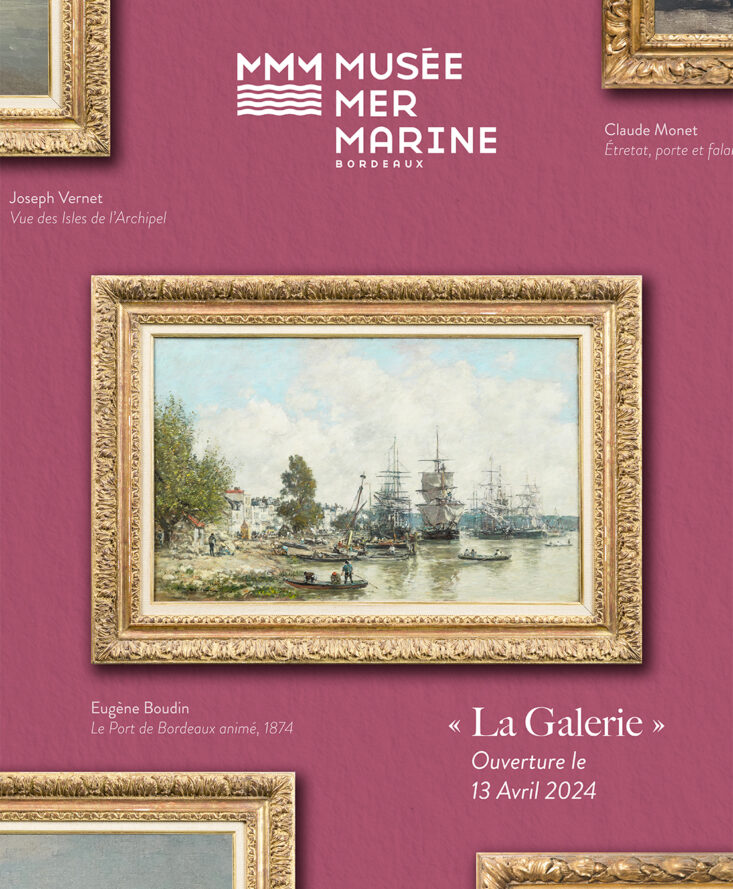
A new gallery devoted to the great masters of the shore
In April 1874, the first exhibition of the artists who would become known as the “Impressionists” opened in Paris. To mark its 150th anniversary, the Musée Mer Marine opened a new gallery bringing together its most recent acquisitions in marine painting: Joseph Vernet, Eugène Boudin, Claude Monet, Albert Marquet and Raoul Dufy share their passion for the sea in a hang of some forty paintings, at the heart of the museum’s permanent exhibition.
With the Industrial Revolution, major scientific breakthroughs and the advent of photography, the 19th century gave rise to a new vision of the world, in which art set aside spirituality and grand historical scenes in favour of celebrating the present moment – that of a triumphant modernity.
The academic, idealised seascapes of Joseph Vernet, followed by the shipwrecks and romanticism of painters such as Eugène Isabey, gave way to a generation of open-air landscape painters who depicted their world without lyrical intent, with a spontaneous touch that made the brushstroke itself the main subject of the canvas.
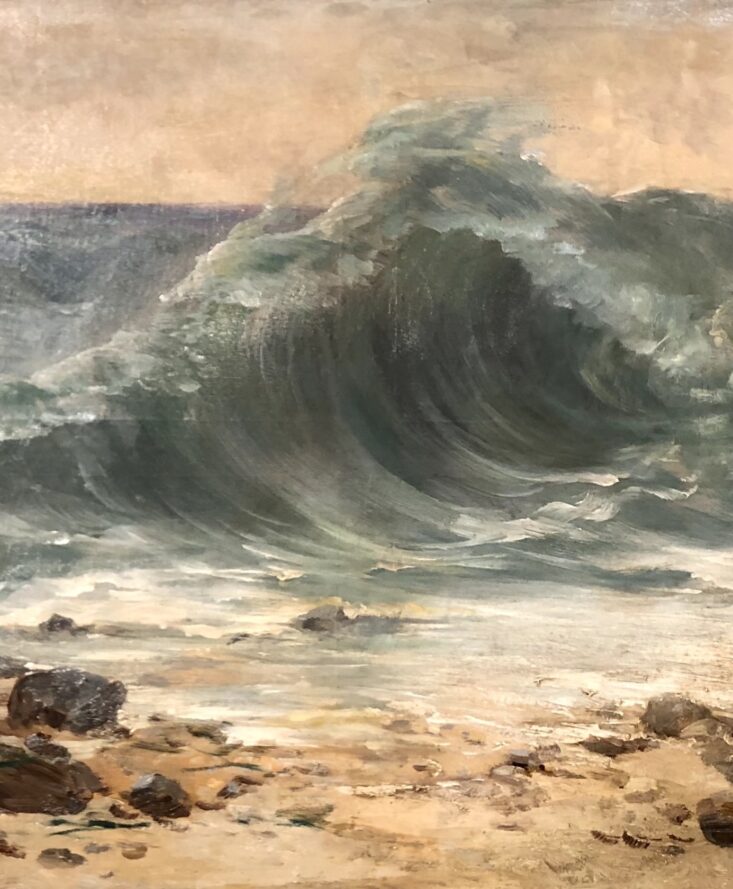
An ode to seascapes and their light
Landscape, once a minor genre, had already become one of the genres most admired by critics thanks to the Romantics’ heroic communion with nature; it then enjoyed a spectacular rise under the impetus of the Impressionists and their followers.
Led by Eugène Boudin, painters such as Claude Monet, Camille Pissarro, Albert Marquet and Raoul Dufy revolutionised the history of painting. Through their modern and authentic depictions of French landscapes, they also helped shape the national identity that France had been seeking throughout the century.
One of the great innovations of the age was the growth of travel: with the spread of the railways and safer, easier sea crossings came a new interest in the sea, which crystallised around the fashion for sea bathing. Artists took advantage of these easier journeys, often travelling together to the Normandy coast, the shores of the Mediterranean, or to Bordeaux.
Painters of a world on the move, they found favourite subjects in the sea – that prodigious liquid mass in eternal motion – in boats, and in rivers too: routes of connection whose depiction speaks less of place than of movement.